


Nurses Committee Newsletter – Spring 2026
EAHAD 2026
The nurses’ stream at EAHAD 2026 in Dublin was attended by a highly engaged audience and inspirational speakers. Throughout the day, we explored key concepts of care for people affected by bleeding disorders. Here is a summary of the main highlights and takeaways from the day.
Joint Session
The joint session is created in collaboration with the Physiotherapist Committee and the Psychosocial Committee. The strength of this session is the possibility to uncover a common theme and incorporate the different perspectives of the multidisciplinary teams involved in patient care.
This year the center of the session was the challenges that patients face in different stages of life.
We were introduced to a family representing inter-generational challenges- and the speakers each gave their perspective on the nature of the challenges and best approaches to care from each discipline.
The session gave a fresh perspective, meaningful discussions, and each discipline contributed to a deeper understanding of the topic.
SLAM Session
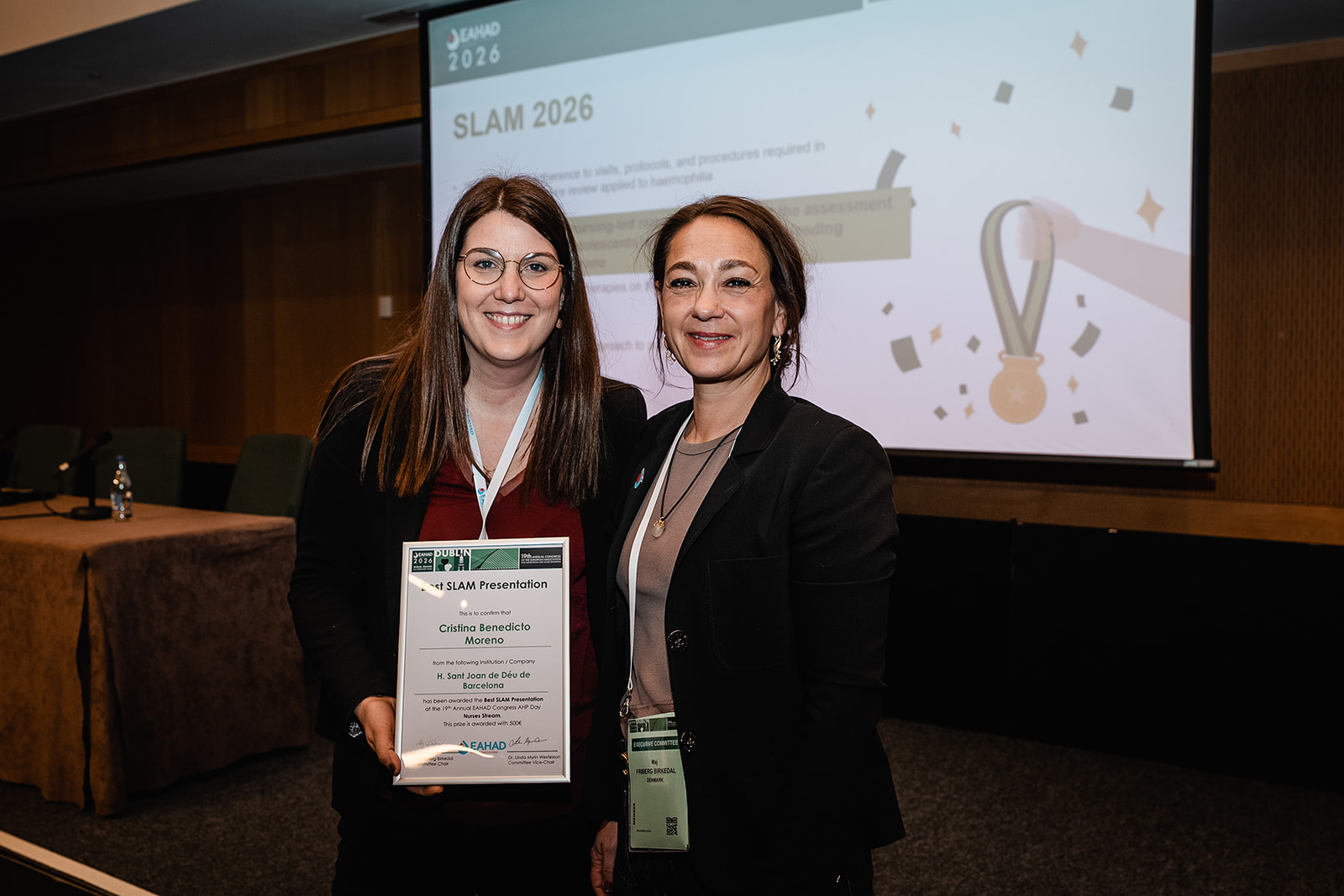
Celebrating Excellence: Cristina Benedicto Moreno Wins the EAHAD 2026 Nurses Slam!
The Nurses Slam session once again provided a powerful platform for innovation, insight, and shared clinical experience. This year, we are proud to celebrate Cristina Benedicto Moreno from Sant Joan de Déu Barcelona Hospital, Spain, as the winner of the EAHAD 2026 Nurses Slam.
Cristina’s winning presentation, titled “Implementation of a Nursing-led Remote Evaluation for the Assessment and Prioritization of Adolescents with Heavy Menstrual Bleeding,” addressed a critically important and often under-recognised area within bleeding disorders. Her project demonstrated the value of a nurse-led, remote assessment model in improving early identification, triage, and prioritisation of patients. By leveraging nursing expertise and innovative care pathways, Cristina showcased how timely intervention can enhance patient outcomes, reduce delays in diagnosis, and ensure that young patients receive appropriate specialist care sooner.
Her approach reinforces the pivotal role nurses play not only in clinical management but also in advocacy, education, and the development of accessible, patient-centred services.
We encourage colleagues across Allied Health Professions (AHPs) to take part in the upcoming EAHAD AHP Day by submitting abstracts.
This is an excellent opportunity to:
- Share your work in haemophilia and bleeding disorders
- Present innovative practice, service development, or research
- Contribute to multidisciplinary care and collaboration
- Develop presentation skills and gain professional recognition
Selected abstracts will be chosen for presentation, offering a platform to showcase your work to an international audience. Presenters will also have the opportunity to win a prize. Projects that improve patient pathways, enhance quality of life, or address gaps in care, like Cristina’s work; are valuable in shaping the future of haemophilia services.
We encourage all interested colleagues to start preparing their submissions and take this opportunity to share their work. Your ideas and experiences could inspire others, drive innovation, and ultimately improve care for patients living with haemophilia and allied bleeding disorders.
Congratulations once again to Cristina Benedicto Moreno on her outstanding and well-deserved achievement.
We look forward to seeing continued excellence and participation across our community at future EAHAD events.
Session 2: Distress
This session emphasized that special attention must be given to the mental health of children, they must be
- Protected from unnecessary treatment and invasive procedures
- Every effort should be made to avoid pain and restraint
Including the use of local anesthetics, nitrous oxide, adequate time and tailored care provided by trusted team members. Subsequently, protocols and algorithms like we know and use for “cardiac arrest” should be in place to ensure consistency in the care delivered, regardless of whether the child needs a procedure during daytime or nighttime.
Procedure-related anxiety in childhood has long-term consequences in adulthood, and the second part of the session focused on anxiety in parents and patients.
Anxiety in adults affected by bleeding disorders is often. Underdiagnosed, overlooked, and poorly supported.
Session 3: Masterclass in Mucosal Bleeds
An interactive masterclass on the management of mucosal bleeds, focusing on gastrointestinal bleeds, epistaxis, and female-specific bleeds, this session provided a comprehensive overview of contemporary care.
Star European Haemophilia Nurse
This year we had the pleasure of awarding two dedicated nurses for their outstanding commitment to bleeding disorders.
Congratulations to both and please remember to nominate your colleagues that deserves a recognition for their commitment.
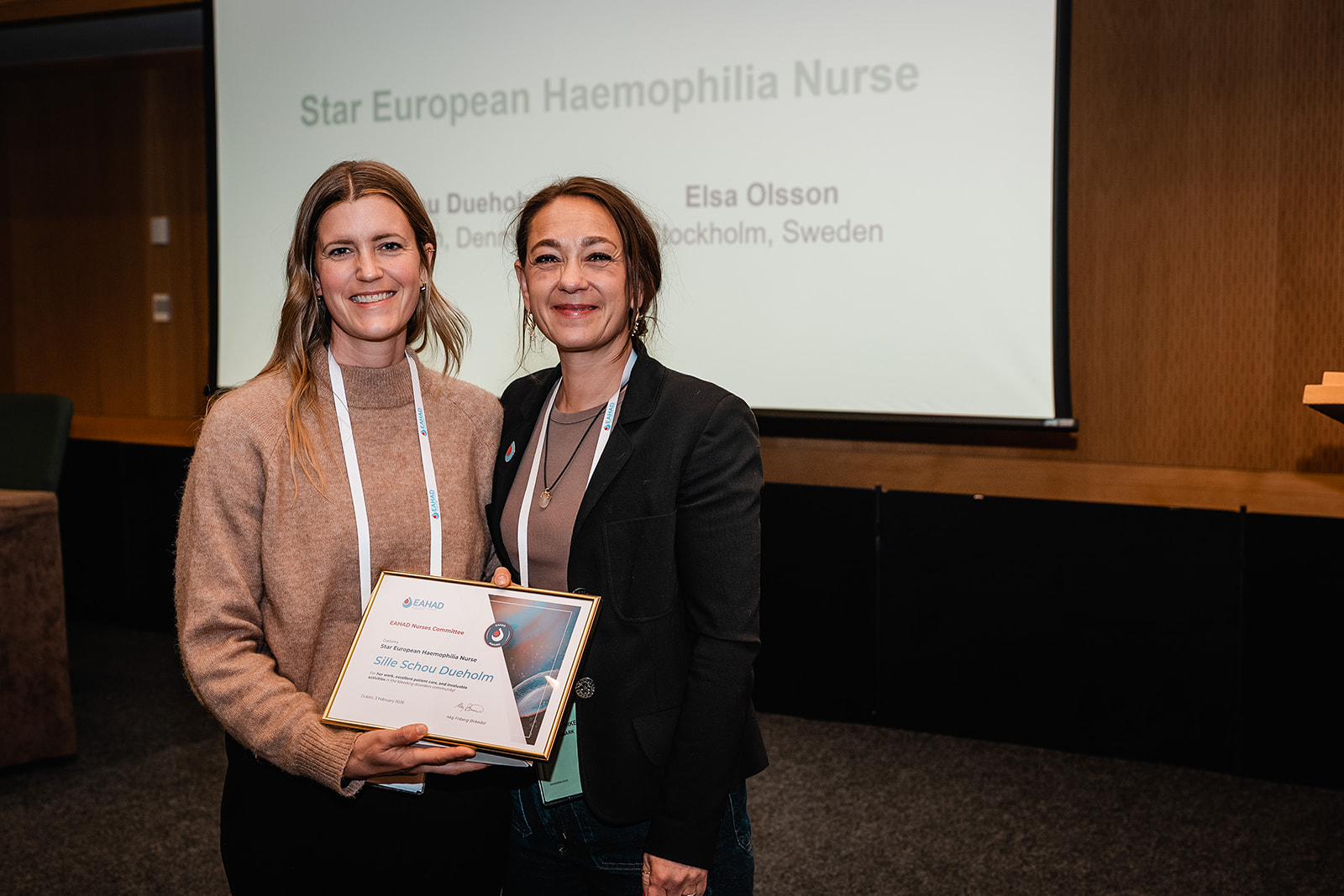
Sille Dueholm, Rigshospitalet, Copenhagen, Denmark
“Since Sille Dueholm became a hemophilia nurse, she has demonstrated an unwavering commitment to advocating for the recognition of this role as a specialized and paid function.
Over the past four years, Sille has worked tirelessly to ensure that hemophilia nursing is acknowledged as a position requiring advanced expertise and additional competencies.
Through her dedication and advocacy, Sille has managed to elevate the status of the function, ensuring it receives the recognition it deserves.
Sille’s tireless efforts and advocacy have had a lasting impact on the recognition and compensation of hemophilia nurses, significantly improving both their professional standing and job satisfaction”.
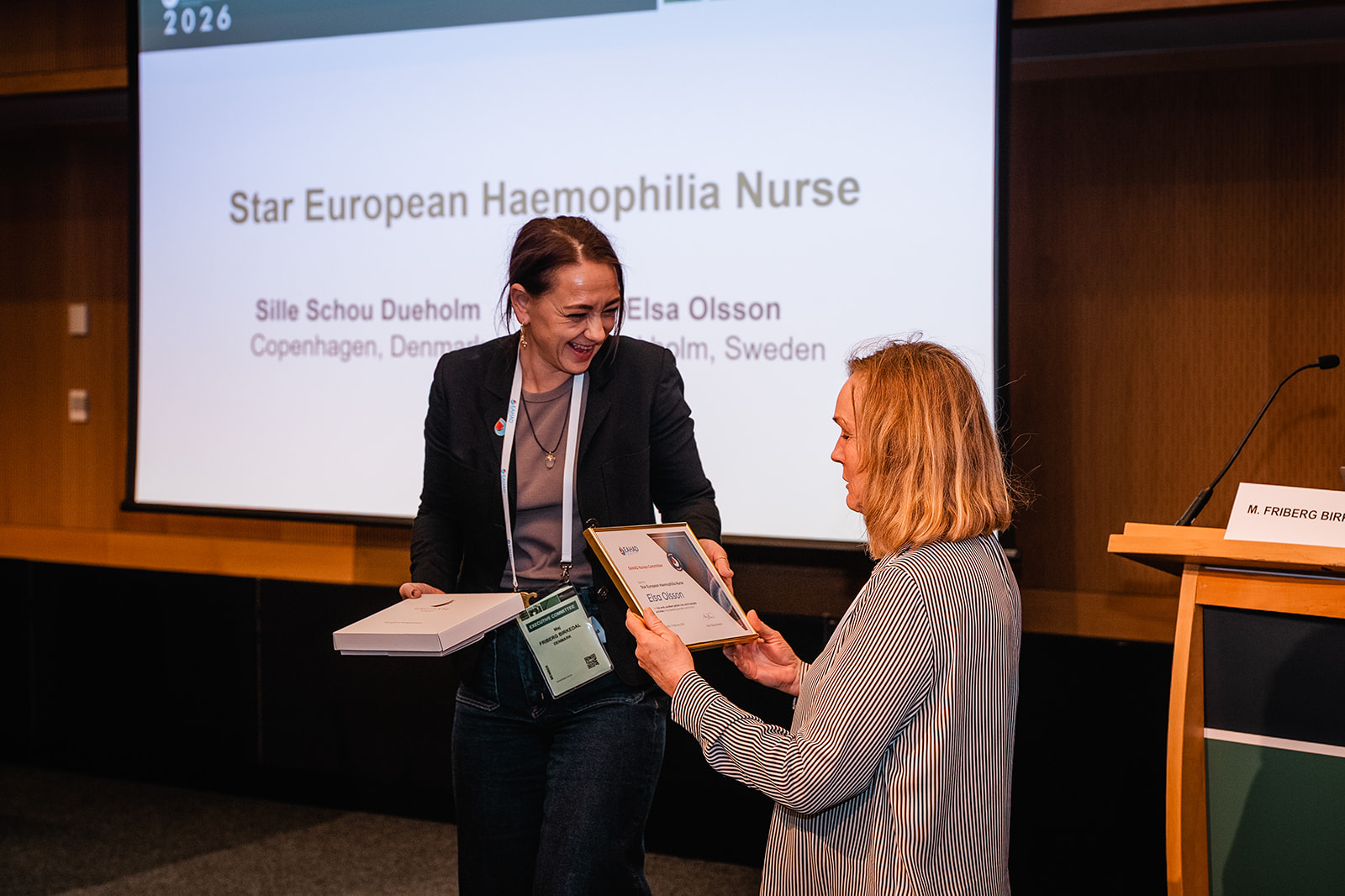
Elsa Olsson, Karolinska University Hospital, Stockholm, Sweden
“Elsa has worked as a bleeding disorder nurse for over 20 years and is well known for her steady commitment to patients and their families. She is a reliable and knowledgeable professional who always ensures that patients’ needs and perspectives are taken seriously.
In addition to her clinical role at Karolinska University Hospital, Elsa has played a central part in developing the Swedish National registry for bleeding disorders. Through her structured and persistent work, she has contributed to creating a functioning national system for documenting care and outcomes for people with haemophilia and related conditions.
Elsa’s long experience, her patient-focused approach, and her important contributions to Swedish National registry for bleeding disorders improvement make her a deserving candidate for this award”
Interview with our 3 new members
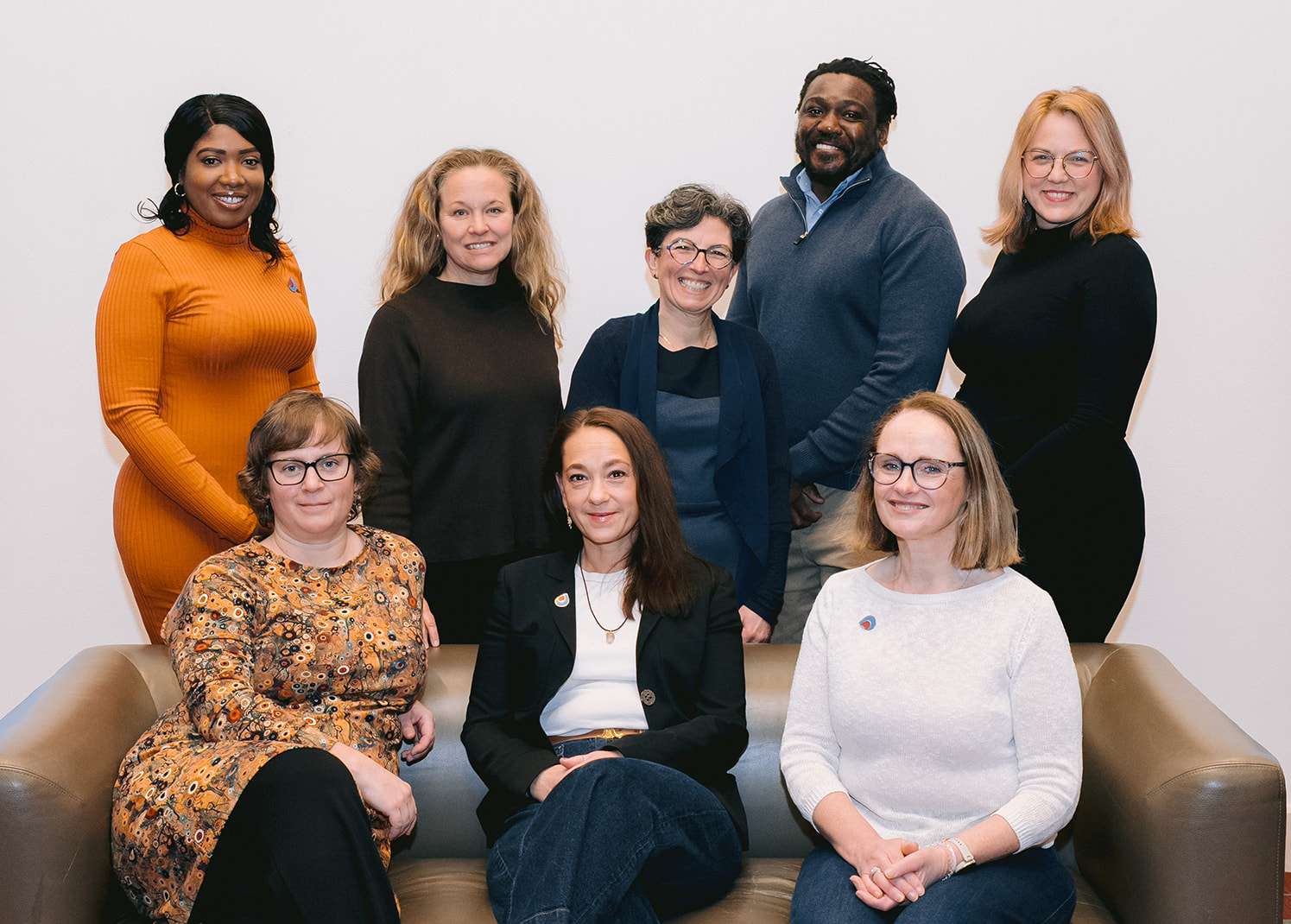
As a child, what did you want to be when you grew up?
Soldier – I think it was just the uniform.
Name 3 hobbies you love:
Exercising, cycling, and watching MotoGP & rugby.
Can you give us a brief overview of what you do in your work?
My job title is a Lead Nurse, meaning I manage a team of Clinical Nurse Specialists (CNS) in a Comprehensive care centre in the south of London. My role consists of clinical work, direct care, and engagement with adult patients, including running clinics, in addition to managing my team. I work directly with CNSs, Consultants, registrars, and other departmental leads to achieve safe care for our patients, as well as engaging heavily in service development. Our service is mostly nurse-led, though MDT collaboration is part of department’s daily operations. I am also a prescriber, which makes the support I give my team quite invaluable.
When you think of the future of the kind of work you do, what gives you a sense of hope?
The amount of work we do to care and support for our patients, especially the networking between centres across the world. Our patients can access care at anytime and anywhere. I also believe the advancement in treatment over the past years gives a sense of hope as we try to give our patients the best treatment possible.
As a child, what did you want to be when you grew up?
I have always wanted to work in the healthcare field.
Name 3 hobbies you love:
I like walking in nature and I do it for about 2 hours a day, and of course I also enjoy hiking in the mountains. I like reading crime thrillers.
Can you give us a brief overview of what you do in your work?
Our center cares for children and adults with inherited bleeding disorders, and I have been working there for 17 years. I am the only nurse and work at 80%. I handle follow-up consultations, preoperative care, and emergency cases that we can manage directly when radiological or other investigations are not required. I am also the coordinator of our center’s therapeutic education program.
When you think of the future of the kind of work you do, what gives you a sense of hope?
I have been on the front line for 17 years, witnessing the evolution of the therapeutic landscape and the range of treatments we can offer patients. It has become so diverse that I hope every patient can find the treatment that suits them and thus live a life free from the consequences of inadequately treated conditions, as was the case in the past. This is still true for some very rare bleeding disorders.
As a child, what did you want to be when you grew up?
I joined the Red Cross at 11 and trained in first aid until 14. Inspired by my biology teacher, I developed a passion for nursing early on. I later attended a medical high school and have no regrets about choosing this path.
Name 3 hobbies you love:
Hiking, Nordic walking, and cooking for my family.
Can you give us a brief overview of what you do in your work?
I am the head nurse of the Department of Hemostasis and Thrombosis, which includes the Hemophilia Center. I organize daily work, coordinate nursing teams, and participate in medical meetings. My role includes patient care planning, supervising both inpatient and outpatient activities, ordering supplies, and coordinating clinical studies. I am also involved in patient and nurse education, research, and training nursing students.
When you think of the future of the kind of work you do, what gives you a sense of hope?
I hope to have more time for nursing research to improve care standards and to focus more on education—helping nurses better support patients and their families in managing their conditions.
Save the dates
Stay in touch
We want to hear from you! If you would like to submit an article for consideration, please get in touch at info@eahad.org. The Nurses Committee would be grateful to receive any feedback you have about the newsletter. This is your newsletter. Tell us what you need!